Borehole Drilling Cost in Kenya 2026
What actually shapes the price of a borehole — survey, depth, casing, testing, pumping, storage and treatment — and how to ask for a quotation you can compare.
What does borehole drilling cost in Kenya in 2026?
If you are planning a borehole, you have probably searched for one number: how much does it cost? It is a reasonable question, but an honest answer has to start with the ground beneath your property.
A borehole in Nairobi may not cost the same as one in Machakos or Marsabit. Even two neighbouring properties can have different depths, formations, access conditions and water requirements. A family home may need a smaller system than a farm, while a school, county project or NGO water programme may need higher yield, larger storage and solar pumping.
The final cost normally depends on the hydrogeological assessment, depth, geology, drilling method, casing, gravel pack, test pumping, water-quality testing, pump, power system, tank, tower, treatment and site access. Qonnect Water Engineering Services describes its approach as a complete water solution, from well water drilling and geological surveys to solar pumping, tanks and water treatment.
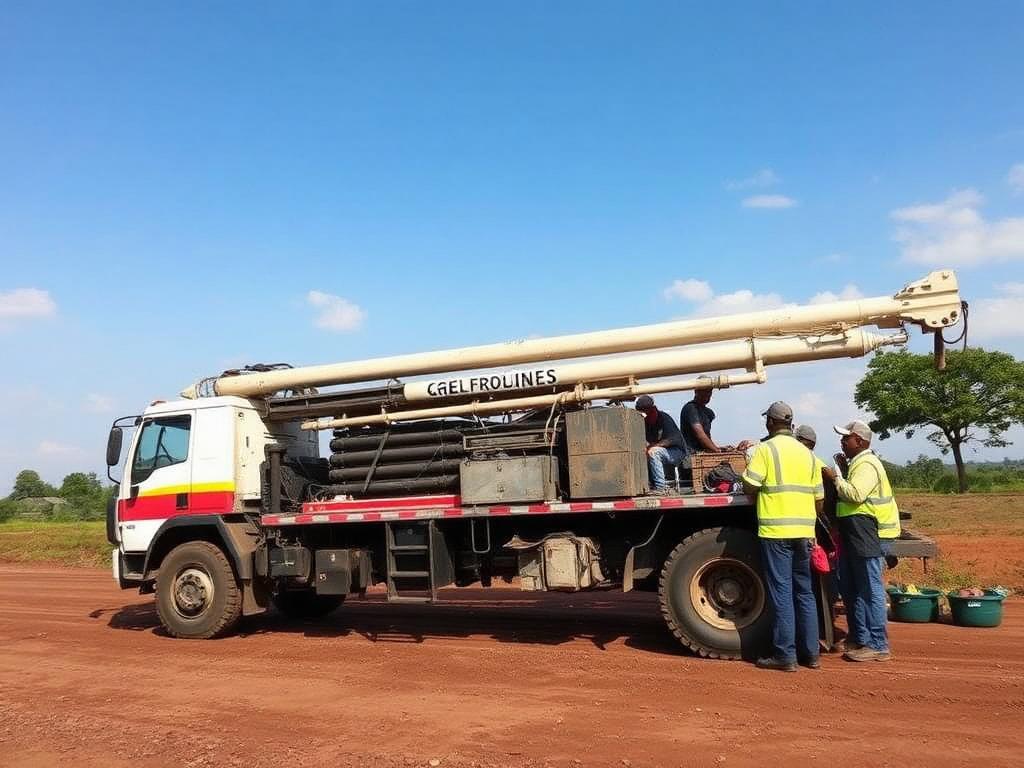
Indicative market guidance — not a Qonnect price list
For a more useful budget, ask for a quotation that separates the project into stages.
What a staged borehole quotation should cover
| Cost area | What it covers | Why it matters |
|---|---|---|
| Survey and site assessment | Geological or hydrogeological assessment and recommended drilling point | Helps reduce guesswork before the rig arrives |
| Approvals and compliance | Applicable applications, permissions and statutory requirements | Keeps the project lawful and properly documented |
| Mobilisation | Moving the rig, crew and equipment to the site | Distance, roads and site conditions affect cost |
| Drilling | Sinking the borehole through the identified formation | Depth and ground type can change the rate |
| Casing and completion | Supporting and protecting the borehole walls and water-entry zones | Poor construction can create long-term problems |
| Test pumping | Measuring yield, drawdown and recovery | Helps select the correct permanent pump |
| Water testing | Laboratory analysis for the intended use | Drinking, livestock and irrigation needs may differ |
| Pumping system | Electric or solar pump, controls and pipework | Makes the water source usable at the point of demand |
| Tanks and towers | Storage, fabrication, installation and elevated distribution | Provides water during peak demand and interruptions |
| Treatment | Filtration, softening, purification or other treatment | Matches water quality to household or institutional use |
What makes a borehole more expensive?
Depth and geological conditions
Some sites can be drilled through relatively soft formations, while others require equipment suited to hard rock. The deeper the drilling and the more difficult the formation, the more time, fuel, materials and specialist work may be required.
The amount of water you need
A homeowner, a commercial farm, a school and a county water project do not have the same daily demand. The system must be sized for real use, including morning peaks, irrigation schedules, livestock, kitchens, sanitation and future expansion.
Power and storage
The borehole is only one part of the water system. A pump must lift water to a tank or distribution point. Qonnect lists solar water pumping, water tanks and towers as core services, making it possible to plan a system for sites where grid electricity is unavailable, expensive or unreliable.
Water treatment
Groundwater can contain minerals or other characteristics that are not visible to the eye. Qonnect lists filtration, softening and purification for safe, clean water. The correct treatment depends on laboratory results and the intended use.
Site access and location
A drilling rig needs a practical route and safe working space. A tight urban plot, a remote Marsabit site, a steep farm or a county project with difficult logistics may require different mobilisation planning.
How to get an accurate quotation
Share your location, a Google Maps pin, photographs of the site, the intended use, estimated number of users, current water source, power availability and any irrigation or livestock plans. If you are a school, county department or NGO, provide the number of beneficiaries, expected daily demand and whether the system should be solar-powered.
A useful quotation should explain what is included and what is not. Ask whether the survey, mobilisation, drilling, casing, development, test pumping, water analysis, pump, solar equipment, tank, tower, treatment and approvals are included or priced separately.
Is a borehole worth the investment?
For homeowners, a borehole can provide greater control over domestic water and reduce dependence on an unreliable supply. For farms, it can support irrigation, livestock and long-term water planning. For schools, institutions, counties and NGOs, a well-designed water project can improve sanitation, service delivery and community resilience.
The investment makes sense when the source is professionally assessed, legally developed, correctly tested and matched with a practical pump, power and storage system. A borehole is not a guarantee of unlimited water; it is an engineered asset that needs responsible operation and maintenance.
Frequently asked questions
What is the average borehole drilling cost in Kenya?
There is no single national average that can responsibly apply to every property. Public market guidance shows that per-metre rates vary widely by drilling method and geology. The total project cost rises after survey, casing, testing, pump installation, solar power, storage and treatment are included. Qonnect provides a site-specific quotation.
Does Qonnect Water publish fixed prices?
No fixed price list is displayed on the public website. Visitors are encouraged to request a quotation based on their project requirements.
Can Qonnect install solar water pumps?
Yes. Solar water pumping is listed as one of Qonnect Water's core services, including installation and maintenance.
Can Qonnect install tanks and towers?
Yes. The company lists supply, fabrication and installation of PVC and steel tanks and water towers.
Is water treatment included automatically?
Treatment depends on the water-quality results and intended use. Qonnect lists filtration, softening and purification, but the exact equipment should be confirmed in the quotation.
Request a Qonnect Water quotation
Tell Qonnect where your site is located and what the water must do for you. Whether you are a homeowner, farmer, school, institution, county team or NGO, a clear description of the need helps the engineering team recommend a practical solution.
Facebook-listed office number: +254 20 2044020. Website: qonnectwater.co.ke